

Resources and publications
Product briefs, peer-reviewed papers, project notes, datasets and technical explainers.
A working library of what Mutus Tech publishes — for farms and advisers evaluating the platform, for academic and project partners and for journalists and programme funders.
Product briefs
What we sell, summarised.
Sustainable Fertiliser Management
How Parallel Farm threads NPKS planning, N-rate sensitivity, Farm Tasks and applied-input records on one field polygon.
AI Adaptive Pest Management
How Pezego turns a field photo into a region-specific pest identification and IPM action plan.
Platform & Technology
The mobile-cloud architecture, AI model services and data pipelines that underpin every Mutus Tech module.
Downloadable PDF product sheets are in preparation — contact us if you need one for procurement or programme submission.
Research publications
Peer-reviewed work.
IEEE Internet of Things Journal · 12(23)
PEZEGO — AI-powered pest identification and climate-smart IPM
Co-developed with RSK ADAS, University of Sheffield and University of Liverpool. 20+ farms, 10,000+ annotated pest images, 38 pests and 10 crops in the UK dataset.
IEEE INDIN 2025
DA-Mamba — state-space N₂O prediction model
A peer-reviewed environmental-performance modelling basis integrated as a Parallel Farm microservice. University of Sheffield + Mutus Tech Ltd. Calibration continuing through project and pilot partners.
Project notes
Active programmes and historical R&D.
2024 – 2026
Climate-Smart Fertiliser consortium
UKRI / Innovate UK-backed · £710K+ total funding award. Multi-partner project calibrating field-level nutrient planning and climate-smart practice with academic and industry partners.
Ongoing
BridgeAI · Innovate UK programme
External programme support for AI scale-up and technical collaboration in agri-food. Includes BridgeAI Annual Showcase participation.
March 2025
UK–India Agri-Tech Accelerator
Selected as one of five UK agri-tech companies for the knowledge-exchange programme; visits to Delhi, Hyderabad and Bengaluru.
2021
Historical R&D projects
Earlier Innovate UK-funded work that informed the current platform — Feasibility Analysis (China) and Mobile Soil Health (Sheffield + ADAS).
Datasets
Data resources underpinning our models.
Datasets used for research, model development and pilot calibration. Field recommendations remain subject to agronomic context and partner validation.
8 June 2025
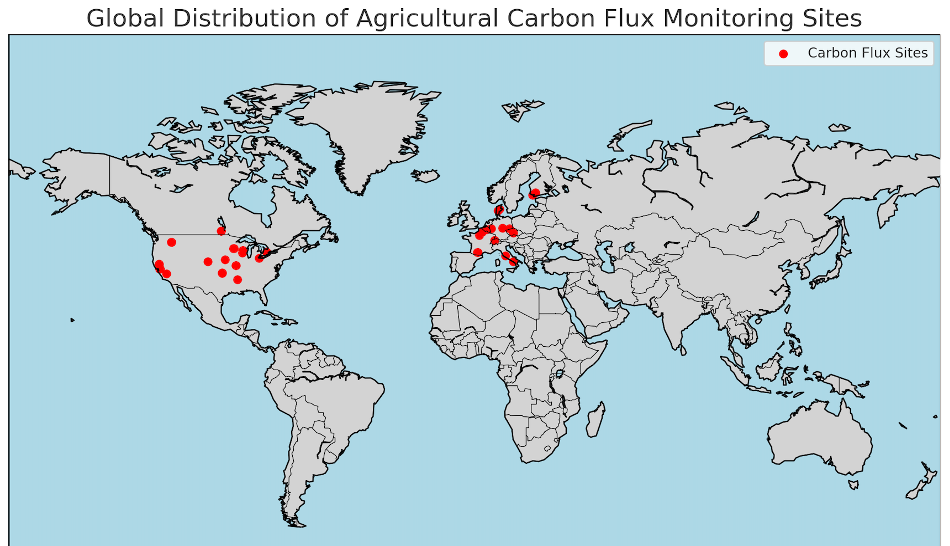
Agricultural Carbon Flux Dataset: advancing multimodal environmental monitoring
A multimodal carbon flux dataset combining climate variables, remote sensing imagery and soil properties to support high-resolution carbon cycle modelling.
8 June 2025
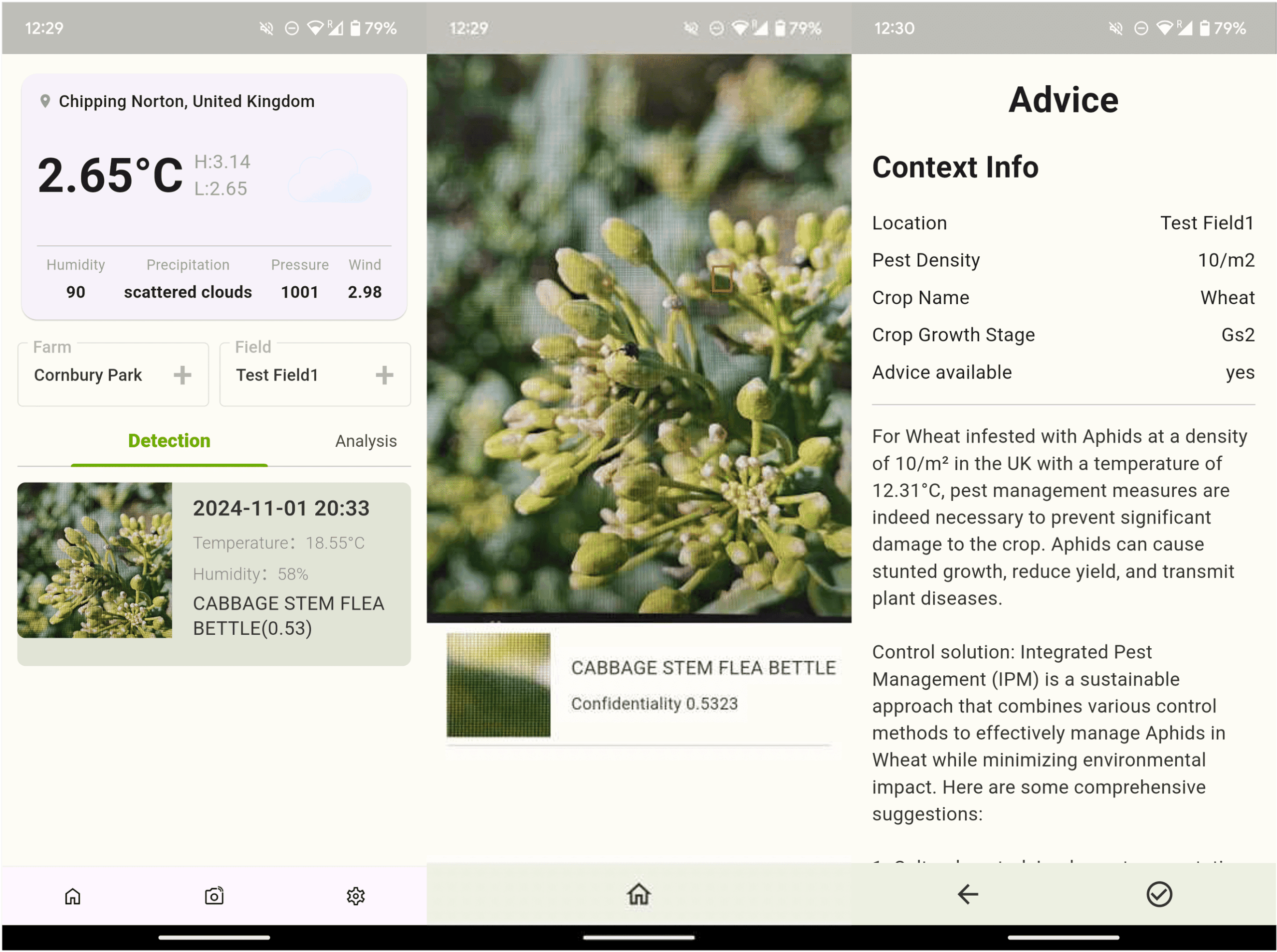
Pezego domain knowledge base
A structured, machine-readable knowledge base that underpins Pezego's large language model for Integrated Pest Management.
6 June 2025
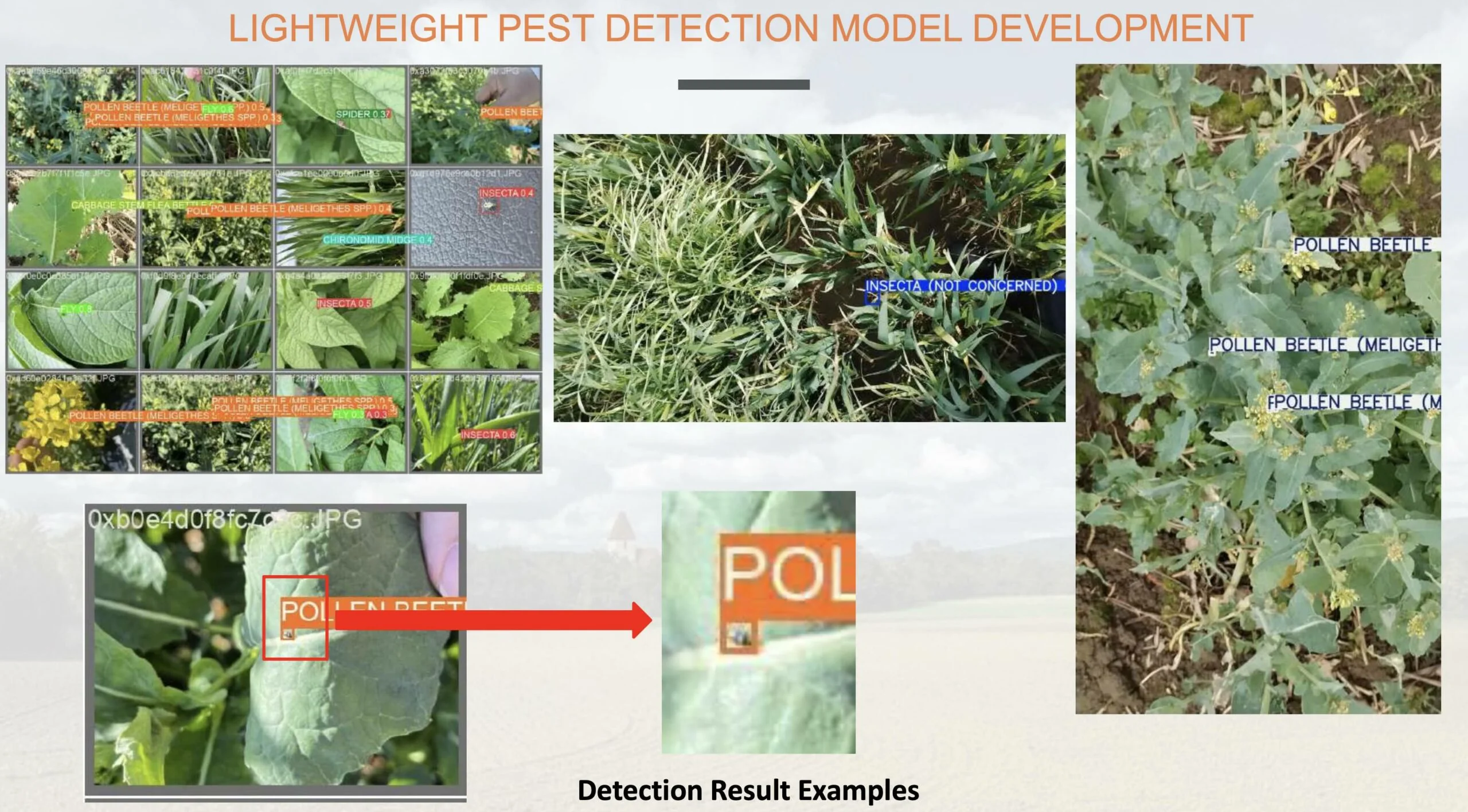
Insect pest data: supporting informed pest management
An archive of more than 50,000 labelled pest images from UK farms — supplemented by over 300,000 historical pest images from Chinese farms — that underpins our pest identification models.
6 June 2025
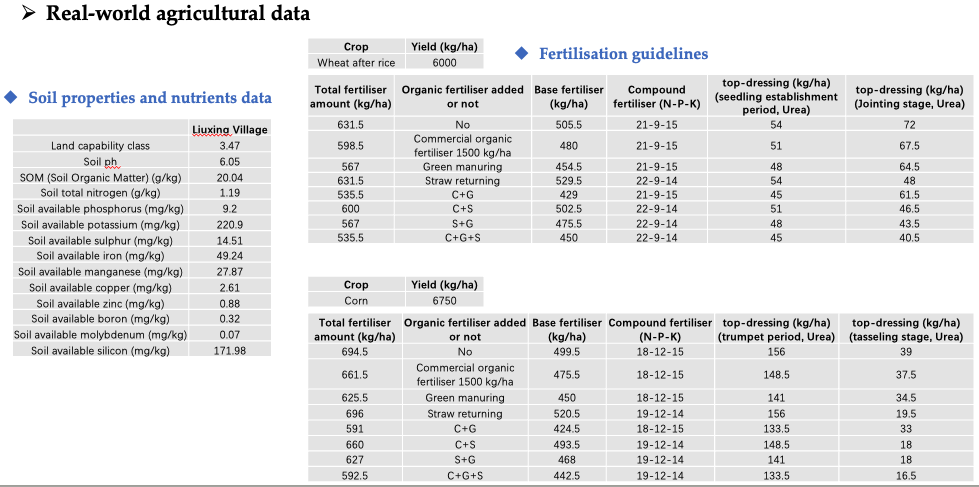
Soil sample data: enhancing soil health and fertility management
A combined dataset of over 4,000 real-world soil samples and more than 300,000 process-based simulated samples, supporting soil health assessment and AI-enabled fertiliser management.
Technical explainers
Short notes on how the platform actually works.
How NDVI works as a crop-response signal
NDVI compares red and near-infrared light reflected from plant leaves. Healthy canopies absorb red and reflect near-infrared strongly — producing higher values. We use Sentinel-2 Copernicus imagery, revisited every ~5 days (subject to cloud cover). NDVI is not a direct soil-health measurement; soil-health interpretation combines NDVI with soil tests, crop context and management records.
How AHDB RB209 N-rate sensitivity checks work
The AHDB Fertiliser Manual RB209 sets recommended N rates based on crop type, target yield, soil-nitrogen supply, previous cropping and soil mineral-nitrogen status. Our N Calculator implements the V08 formulae and exposes the same parameters. Economic sensitivity checking takes that agronomically derived rate and recomputes financial impact at current grain and fertiliser prices — supporting an informed decision, not replacing agronomic judgement.
How field task records support traceability
Every Farm Task carries the field polygon, recommended rate, any adjusted rate, assignee, due date and application notes. When applied, the operator logs completion date, applied rate, photos and a weather snapshot. Because the same polygon is the unit of work at every stage, plans, tasks, applied inputs, NDVI scans and weather context all sit on one record — ready for partner review without after-the-fact reconstruction.
How soil-health interpretation combines soil tests and crop response
Soil health is multi-parameter — chemistry (pH, organic matter, available P/K/Mg, S), physical structure, biology and crop response over time. The platform brings together what each measurement can show: soil tests for the chemical baseline; Climate History for seasonal context; NDVI Analysis for crop response; Records for management decisions. No single signal is a verdict — but together they support an informed adviser conversation.
Need something specific?
Looking for a product sheet, dataset sample or research brief?
We share product briefs, dataset samples and project methodology documents on request — typically with academic, programme or supply-chain partners.