
Platform & Technology
One operating record. Six technology layers.
The Mutus Tech platform threads soil, crop, climate, satellite and operational data onto a single field-polygon record — and pushes recommendations all the way into the work order, applied-input log and partner-ready report.
The stack
What the platform is made of.
Data model
Field polygon as the unit of work
Every plan, task, NDVI scan, input log and report attaches to the same geometry. Multi-farm, multi-tenant, role-based scope (Admin / Adviser / Farmer) — the field polygon you assessed is the polygon you plan, task, monitor and report.
Architecture
Mobile-cloud, built for the field
Java/Spring backend on MongoDB with REST APIs; Vue 3 single-page web dashboard; iOS and Android mobile apps for field use. Firebase Cloud Messaging delivers push notifications for due and overdue tasks. The mobile experience is designed to operate in low-connectivity rural areas.
Data sources
Multimodal inputs per polygon
Soil chemistry (pH, P, K, Mg, S, water capacity), crop type and growth stage, weather and climate history, satellite NDVI (Sentinel-2 Copernicus, refresh every ~5 days subject to cloud cover), commodity market prices, and operational activity logs captured from mobile.
AI services
Pluggable, research-backed model layer
Recommendation engine implements AHDB RB209 (V08) for nitrogen rates with economic sensitivity checking. DA-Mamba — a state-space model published at IEEE INDIN 2025 — runs as a Parallel Farm microservice for N₂O environmental-performance modelling. Pezego provides AI-powered pest identification as an extension signal.
Reporting
Evidence-ready exports
Templated multi-field reports, PDF exports, partner-ready operational records: recommended rate, adjusted rate, applied rate, completion date, photos, input notes, NDVI context and yield indicators — all keyed to the same polygon.
Governance
Data isolation and partner due diligence
Role-based access with organisation-level scope isolation. Operating records prepared for partner validation rather than self-issued certification. Provenance, validation-status flags and project-methodology attribution carried with the data. UK-incorporated (Companies House 13274475).
Live modules
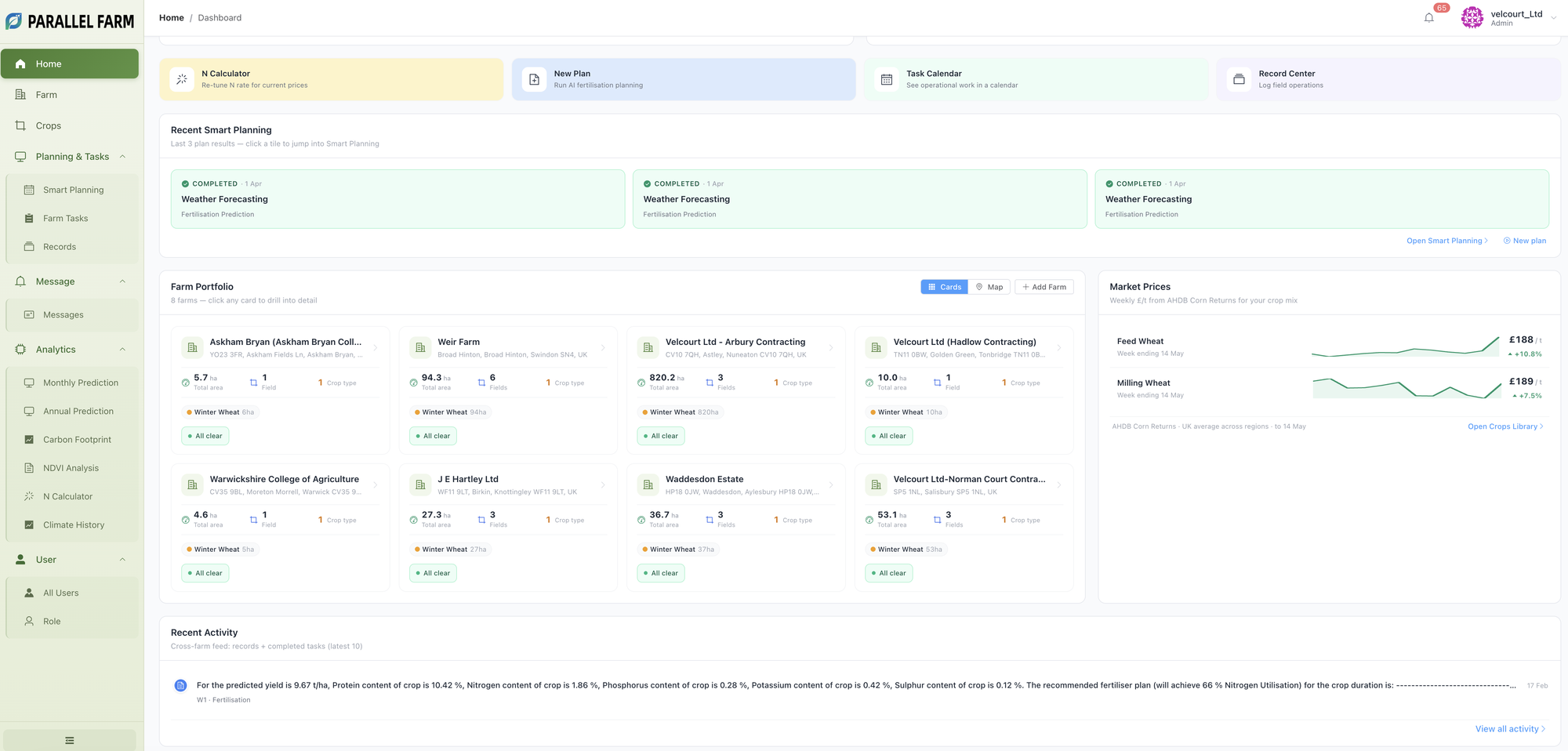
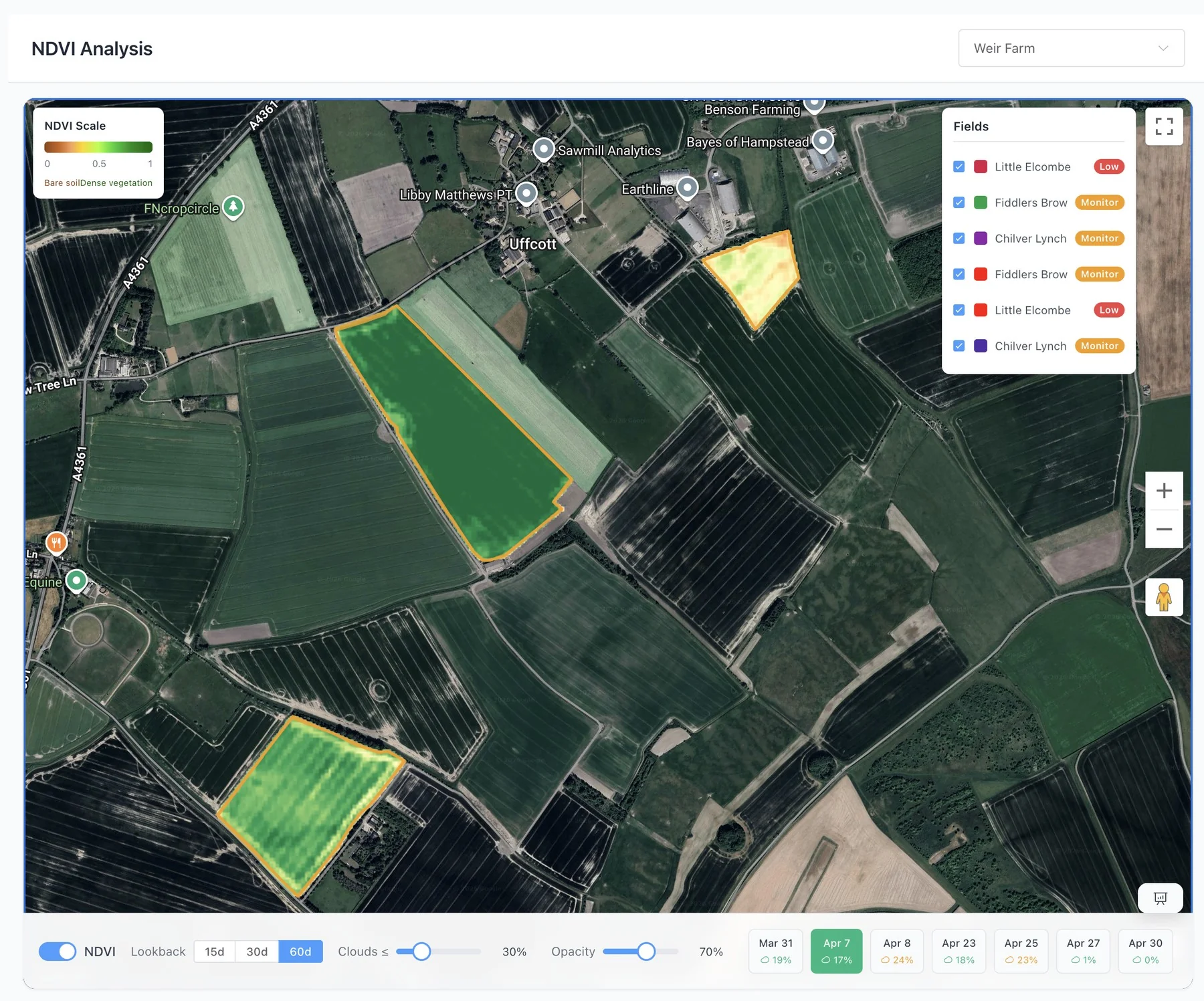
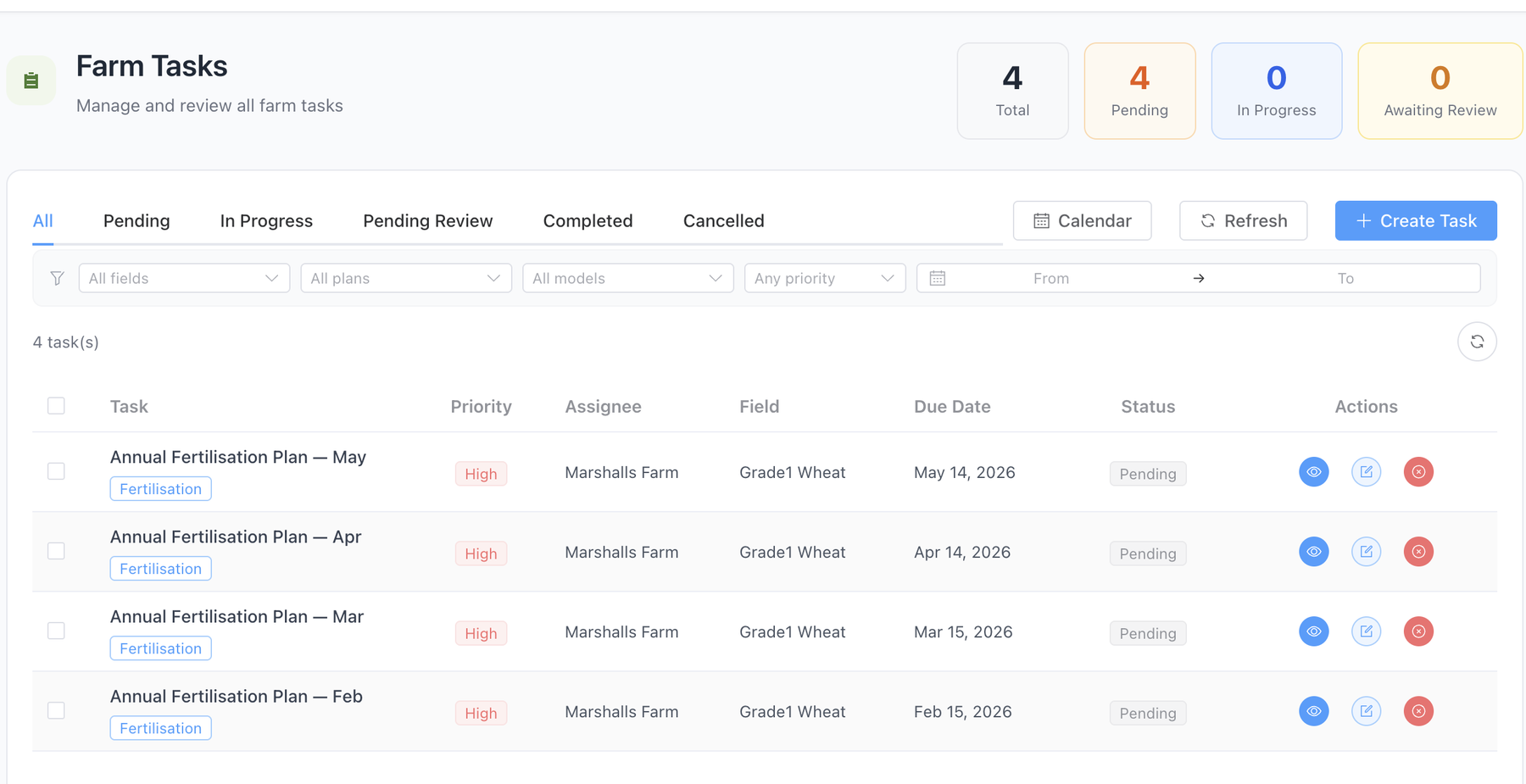
Built modules — the same data, surfaced six ways.
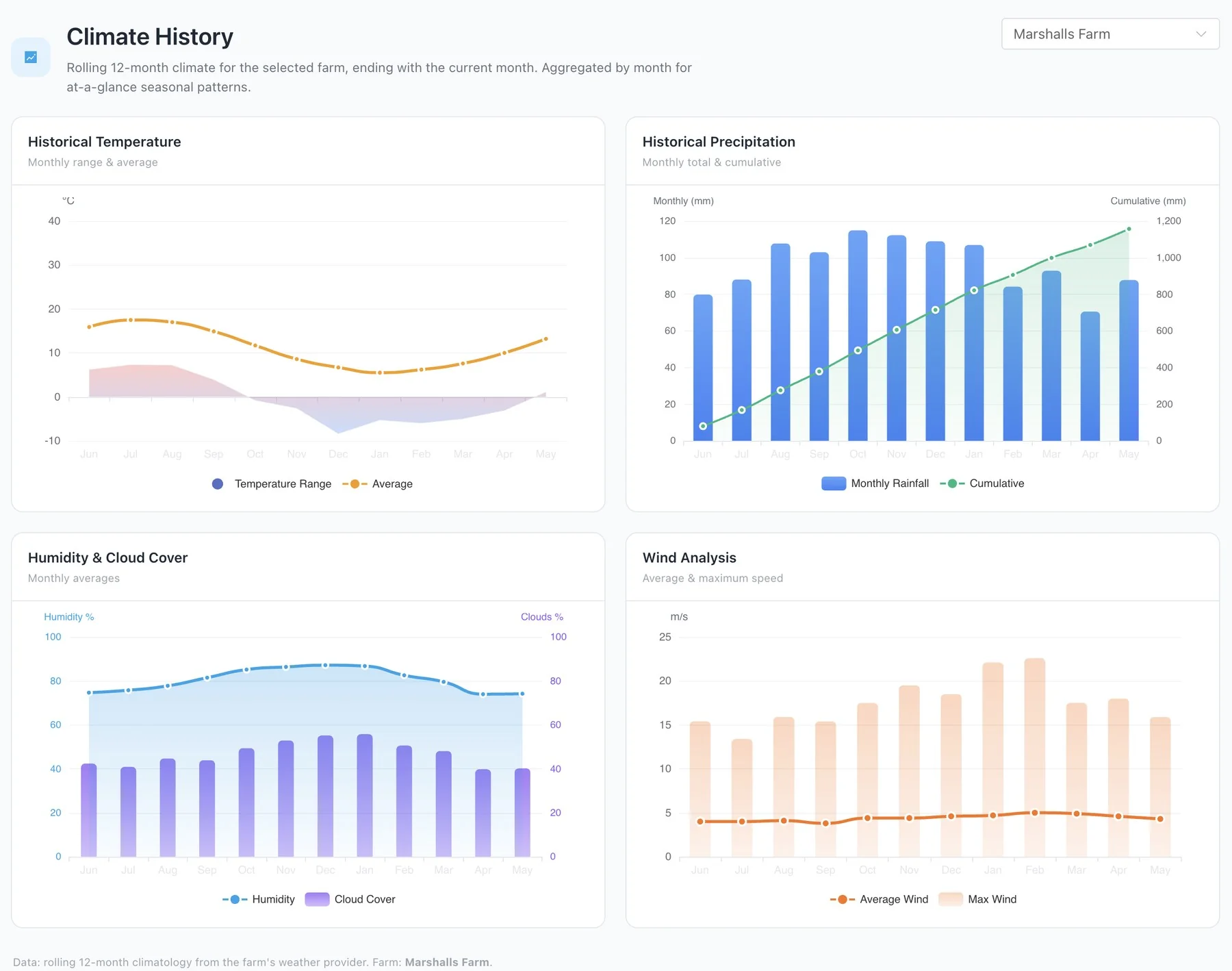
Screenshots from the production Parallel Farm environment.
How it threads
From soil chemistry to a partner-ready pack.
Each row is a data path that lives in the platform today. The same polygon is the unit at every step.
| From | → | To | What threads through |
|---|---|---|---|
| Soil tests | → | Annual Prediction | Per-polygon NPKS plan with yield & grain-composition estimate |
| Climate History | → | N Calculator | Economic sensitivity recheck when grain or fertiliser prices move |
| NDVI Analysis | → | Field record | Vegetation-vigour timeline interpreted with management notes |
| Recommendation | → | Farm Tasks | Field-level work order with date, rate, owner, status |
| Applied input | → | Records | Photos, weather snapshot, GPS pin, completion notes |
| Records + NDVI | → | Partner-ready pack | Same polygon, multi-field rollups, PDF / DOCX export |
What we don't claim
Boundaries we observe.
NDVI is a signal, not a verdict.
Sentinel-2 NDVI indicates vegetation vigour and crop response. Soil-health interpretation combines NDVI with soil tests, crop context and management records.
Models are research-backed, not field-final.
DA-Mamba and our N-rate engine are peer-reviewed modelling bases. Calibration continues through pilot and project partners; field commercial accuracy is partner-validated.
Carbon Footprint is estimation, not MRV.
GHG figures are environmental-performance estimates to inform partner conversations — not self-issued MRV, certification or carbon-credit evidence.
Evidence is partner-ready, not auditor-stamped.
We prepare operating records for partner review and due diligence. Standards, agronomy and validation partners co-design outcome packs.
Partner with us
Looking at the platform for a research, programme or pilot fit?
We work with universities, agronomy bodies, supply-chain programmes and funders on field-level pilots and validation projects.